
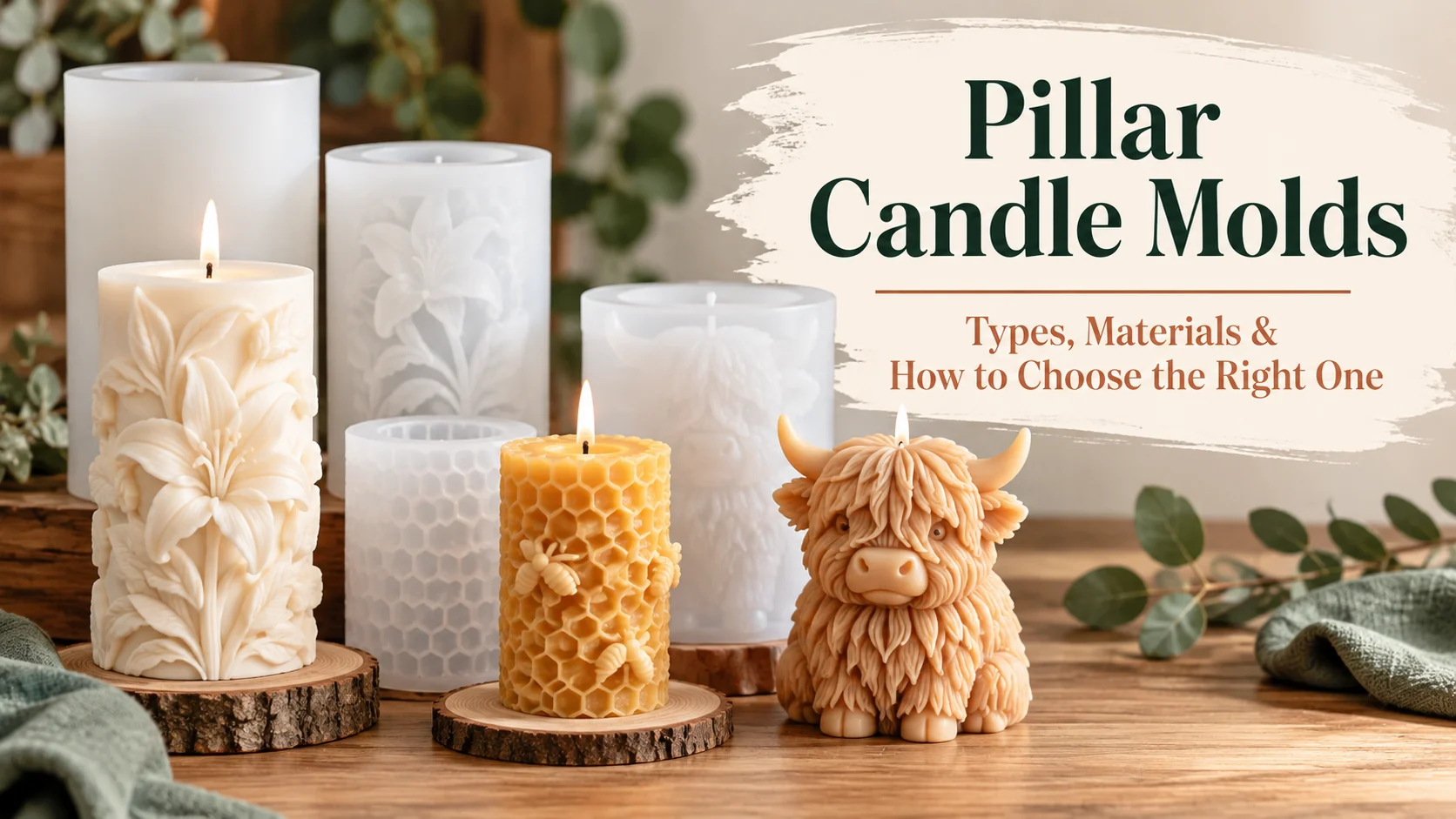
Pillar candle molds let you create freestanding candles without a jar, from simple smooth cylinders to intricate flowers, honeycomb textures, and sculptural shapes. Choosing the right mold makes a real difference to how smoothly the wax pours, how cleanly the finished candle releases, and how easily you can repeat the result.
In this guide, we compare silicone, metal, and polycarbonate pillar candle molds, explain what matters most when shopping, and show how to match your mold with an appropriate pillar wax and wick. We’ve also included three decorative silicone molds to consider for creative projects.
Quick Answer: What Is the Best Pillar Candle Mold?
For most beginners, a simple, candle-compatible silicone pillar mold is an approachable choice because its flexibility helps release the cooled candle. Metal molds are useful for consistent, classic cylindrical pillars, while polycarbonate molds can provide smooth finishes and visibility during pouring. Whatever you choose, check the mold maker’s temperature limits and use wax formulated for freestanding candles.

What Are Pillar Candle Molds?
A pillar candle mold shapes liquid wax while it cools into a freestanding candle. Unlike a container candle, the wax needs enough structure to stand on its own after you remove the mold. That is why using a dedicated pillar or molding wax matters just as much as selecting a good mold.
Molds can be simple tubes, fluted columns, geometric designs, or detailed sculptural shapes. Some include a hole for threading a wick before pouring; others require a wick pin or carefully positioned wick. Decorative silicone molds sold for soap or resin may be usable for wax only if the manufacturer specifies a suitable working-temperature range and the shape is appropriate for a stable, burnable candle.
Silicone vs. Metal vs. Polycarbonate Pillar Candle Molds
| Mold type | Strengths | Limitations | Best fit |
|---|---|---|---|
| Silicone | Flexible, easier removal, intricate designs | Can distort or need external support; inspect temperature rating | Beginners, sculptural candles, textured designs |
| Metal (often aluminum) | Durable, rigid, smooth traditional cylinder shapes | May require release agent or additional unmolding care | Classic pillars and repeat batches |
| Polycarbonate | Rigid, transparent, smooth finish | Can crack or scratch; strict manufacturer heat limits | Simple designs where visibility helps |
Silicone Pillar Candle Molds
Silicone’s flexibility is its main advantage. Instead of pulling a rigid candle out of a rigid tube, you can carefully peel the mold away after the wax is fully set. Silicone also allows for undercuts, raised details, and decorative designs that would be harder to remove from metal molds.
Its limitations are equally important: tall or thin silicone molds may need support to stay upright while pouring, and soft molds can bow under the weight of wax. Choose a mold specifically rated for the temperature of your candle wax.
Metal Pillar Candle Molds
Metal molds, often aluminum, are a familiar choice for smooth-sided traditional pillars. They hold their shape well and can be reused for many batches with proper care. Many designs have a small opening for threading the wick, which needs to be properly sealed before pouring.
Release can require patience. Depending on the wax and mold, the manufacturer may suggest a compatible mold-release product, specific cooling conditions, or a second pour to address wax shrinkage.
Polycarbonate Pillar Candle Molds
Polycarbonate molds are clear and rigid, making it easier to see the wax level during filling. They can produce attractive smooth candles, but they are susceptible to scratching and damage if mishandled. Never exceed the mold manufacturer’s temperature limits or use sharp tools to pry out a stuck candle.
Three Decorative Silicone Candle Molds to Explore
For makers who want something more creative than a plain cylinder, these supplied product examples offer honeycomb, animal, and floral styling. They are shopping options, not hands-on-tested recommendations. Check dimensions, wax compatibility, wick placement, temperature ratings, and seller instructions before purchasing.

MEMOVAN Bee Cylinder Silicone Molds — 2 Pieces
A honeycomb and bee-inspired design suited to makers interested in beeswax-themed decorative candles. The textured surface can create a distinctive appearance.
Check: finished dimensions, pouring-temperature tolerance, and how a centered wick is accommodated.
View Bee Candle Molds on Amazon
Japleed Highland Cow Silicone Mold
A sculptural animal-shaped mold for novelty candle projects and decorative displays. Its detailed silhouette may take more care to unmold than a simple pillar.
Check: stable base, protruding features, wick path, and suitability for a burning candle; some designs are better treated as display pieces.
View Highland Cow Mold on Amazon
Japleed Embossed Lily Flower Silicone Mold
A floral mold for detailed decorative projects, special occasions, and gift-oriented candles. Complex petals can require patient cooling and gentle release.
Check: dimensions, fragile details, wick positioning, and full burn behavior before offering the result as a functional candle.
View Lily Flower Mold on AmazonHow to Choose the Right Pillar Candle Mold
Start With Shape and Skill Level
If you’re new to pillar candles, start with a simple round cylinder. It is easier to center a wick, assess the finished shape, and compare burn-test results. Detailed floral and animal shapes are engaging projects, but intricate edges can create uneven melting and unpredictable burning.
Check Finished Candle Dimensions
Compare the interior mold diameter, height, and estimated wax capacity. Diameter is especially important when selecting an initial wick for a freestanding candle. The mold’s advertised overall dimensions may not match the finished candle’s maximum or minimum width.
Confirm the Temperature Rating
Your molding material must tolerate the wax’s recommended pouring conditions. Don’t assume all silicone or plastics have the same limits. Read the specific manufacturer’s instructions and avoid overheating wax to make it pour faster.
Plan for Wick Placement
Many classic molds include a wick hole and require a seal around the opening. For a design without a wick hole, use the mold maker’s recommended technique for centered wicking. A decorative shape that cannot be wicked safely may be better as a non-burning wax ornament.
Consider Repeated Use and Storage
Rigid molds are easy to line up for repeat production; silicone molds need appropriate support and storage so they retain their shape. Inspect all molds for tears, warping, cracks, residue, and other wear before each use.
Which Wax Works Best for Pillar Candle Molds?
Use a wax designed to hold its shape after unmolding. Depending on the project, this could include a formulated paraffin pillar blend, appropriate beeswax, or a dedicated soy pillar blend. Soft container wax is often unsuitable because it is designed to remain in a vessel.
Consult our guide to choosing the right type of candle wax before deciding on a formula. For more general tools, review the basic candle-making materials checklist.
How to Make a Simple Pillar Candle in a Mold
- Prepare a clean, dry mold. Confirm its candle-wax compatibility, temperature limits, and stable support.
- Choose compatible pillar wax. Follow the wax supplier’s heating, fragrance, dye, and pouring instructions.
- Center and secure the wick. If the mold has a wick hole, seal it as directed so molten wax cannot leak.
- Melt the wax using controlled heating. Monitor temperature with a thermometer and never leave hot wax unattended.
- Add approved ingredients. Use suitable candle dyes and fragrance only within specified limits.
- Pour slowly. Use the mold maker’s method and leave the candle undisturbed while cooling.
- Allow it to set fully. Some waxes contract and may require additional steps specified by the wax supplier.
- Unmold carefully. Peel silicone back gently or follow the recommended process for rigid molds.
- Inspect and test. Check stability, wick placement, and the finished candle before attempting a supervised burn test on a suitable nonflammable holder.
For safe wax melting, see our double boiler for candle making guide. If your pillar uses color, our candle wax coloring tutorial explains purpose-made dyes.
Do You Need Mold Release Spray?
Not always. Many flexible silicone molds release cooled wax without added spray. Rigid metal molds may benefit from a compatible release product, depending on the wax and mold finish. Always follow the mold supplier’s instructions: excess spray can leave a surface film or interfere with the finished appearance.
If a candle sticks, don’t use knives or excessive force. Verify that it has cooled fully and use the mold maker’s recommended release method. Different mold materials respond differently to cooling and physical pressure.
Common Pillar Candle Mold Problems
| Problem | Possible reason | What to try |
|---|---|---|
| Candle sticks in mold | Incomplete cooling; incompatible wax or release procedure | Allow full set and follow mold-specific removal guidance |
| Edges or fine details break | Delicate shape, wax too brittle, early removal | Use compatible pillar wax and demold slowly |
| Sunken center or cavity | Wax contraction while cooling | Use supplier-recommended relief and repour technique |
| Candle leans or tips over | Irregular base or insufficient rigidity | Choose stable shapes and a suitable freestanding wax |
| Wick is off-center | Wick moved during pouring or cooling | Use appropriate centering tools and retest |
| Wax leaks from base | Unsealed wick hole or split seam | Use compatible mold sealant and inspect before pouring |
Our broader common candle-making mistakes guide covers additional pouring, fragrance, temperature, and wick issues.
Are Detailed Sculptural Candles Safe to Burn?
Not every decorative shape is suitable for burning. Thin petals, horns, ears, protrusions, or uneven bases can produce unstable melt pools and unexpected dripping. Some ornate molded wax pieces are better used as decorations. If a design is meant to be burned, test its complete wax, wick, and shape combination on a suitable fire-resistant holder, following appropriate candle-safety practices. Never leave a burning pillar candle unattended.
Frequently Asked Questions
Are silicone molds good for pillar candles?
Yes, suitable silicone molds are a popular choice, especially for beginners and intricate shapes. Confirm they are compatible with candle wax and rated for the required pouring temperature.
What is the difference between a pillar mold and a container candle jar?
A pillar mold is removed after the wax cools, leaving a freestanding candle. A container jar remains part of the candle during burning, so the wax can be softer and the vessel must be appropriate for flame exposure.
Can you use regular soy wax in pillar molds?
Only when the product is formulated for pillars or molded candles. Many soft soy container waxes do not have sufficient structural rigidity once removed from a mold.
Which molds are easiest to unmold?
Simple flexible silicone molds are often the easiest for beginners. Deep undercuts and very intricate details can still be challenging.
Can I use a soap mold for making candles?
Only if the manufacturer confirms wax compatibility, appropriate temperature tolerance, and a design suitable for your project. Soap-mold labeling alone is not enough.
Are metal pillar candle molds reusable?
Yes. Purpose-made metal molds are durable and commonly designed for repeated use. Clean, inspect, and store them according to supplier instructions.
Are plastic pillar molds safe to use?
Some polycarbonate molds are intended for candle molding. Use only products designed for the intended wax and pouring temperature; don’t substitute ordinary household plastic containers.
How do I choose the wick size for a pillar candle?
Use the finished candle diameter, wax formula, fragrance, dye, and wick manufacturer guidance as starting points. Validate the actual candle with controlled burn testing.
Final Thoughts: Choose the Mold for the Candle You Want to Make
The best pillar candle mold depends on the style you’re creating. Silicone is flexible and inviting for creative shapes, metal is an excellent classic choice for smooth cylinders, and appropriate polycarbonate molds offer visibility and consistent form. Begin with a stable shape and dedicated pillar wax, then experiment with more detailed designs once your process is consistent.
Leave a Reply