
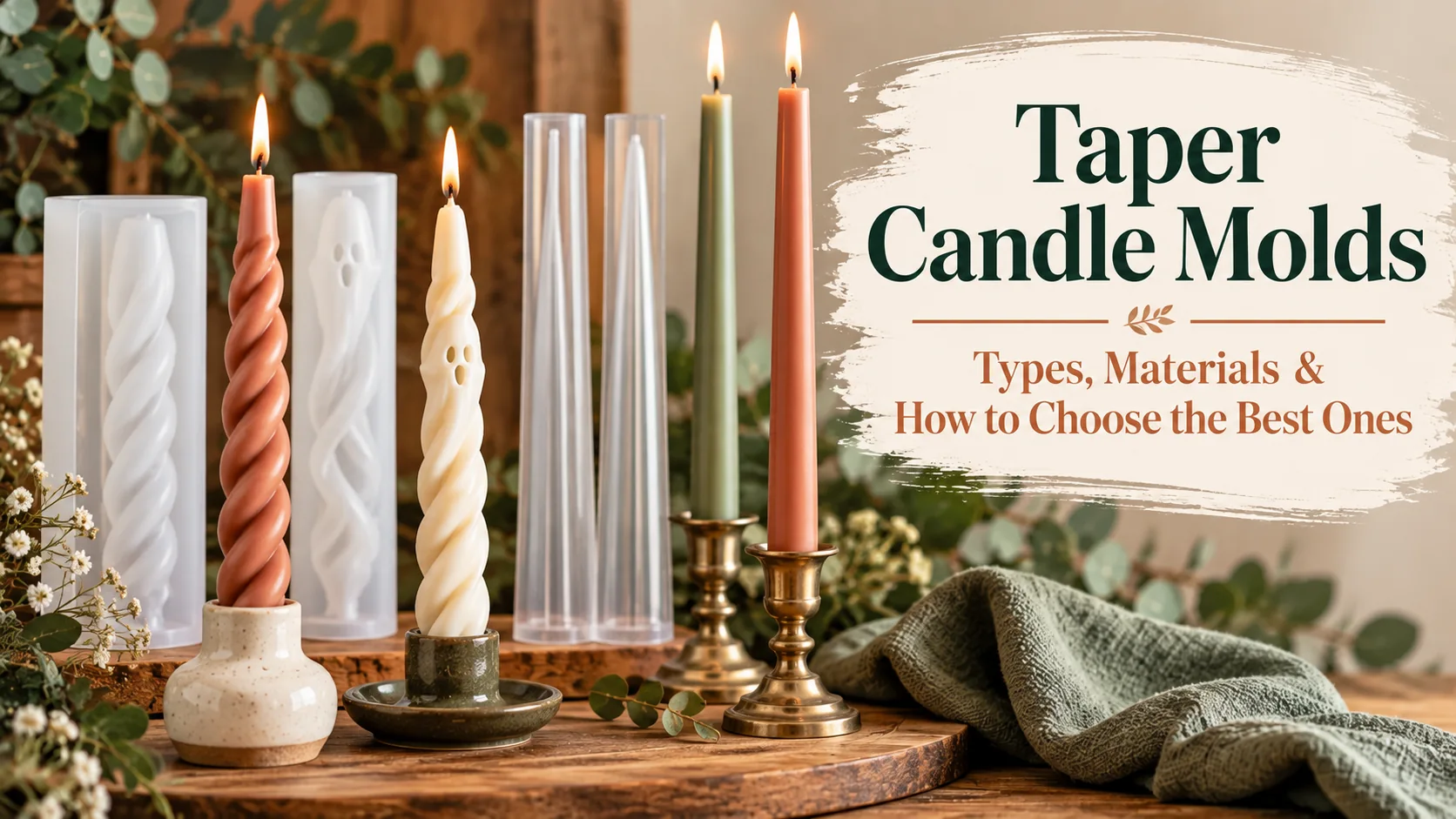
Traditional dinner candles, sculptural spirals, and seasonal novelty candles all begin with an appropriate mold. But the best taper candle molds aren’t always the prettiest ones: the material, cavity dimensions, wick path, and recommended wax affect both how easily a candle releases and how it eventually burns.
This guide compares silicone, metal, and rigid plastic molds; explains the difference between classic dinner tapers and decorative taper-like shapes; and walks through pouring, unmolding, troubleshooting, and buying decisions. You’ll also find three example molds with images and purchasing links.
Quick Answer: Which Taper Candle Mold Should You Choose?
Silicone is useful for flexible release and detailed shapes, particularly decorative twisted tapers. Metal is durable and often chosen for repeat production of traditional smooth tapers. Rigid plastic or polycarbonate can produce smooth forms, but requires careful attention to temperature limits and release procedures.
For your first classic dinner candle, select a simple straight taper mold with a defined wick route, a firm taper-rated wax, and matching wick guidance. For a novelty spiral or ghost taper, expect more demanding wick placement and burn testing.

What Is a Taper Candle Mold?
A taper candle mold forms a long, generally narrow, freestanding candle designed to fit an appropriate candleholder. Traditional tapers narrow toward the top and usually have a smooth surface, while newer decorative versions may be twisted, ribbed, shaped like characters, or otherwise sculptural.
The mold is only part of the candle system. Freestanding tapers need wax formulated for the shape, the correct wick for the narrow body, and testing in a stable holder. Some novelty pieces may be better treated as decorative objects until their burn performance is established.
Silicone vs. Metal vs. Polycarbonate Taper Candle Molds
| Material | Strengths | Limitations | Best fit |
|---|---|---|---|
| Silicone | Flexible; releases ornate contours easily | Can bow or distort; may need support | Spirals, sculptural and novelty tapers |
| Metal | Rigid, robust and repeatable geometry | May need release preparation; careful unmolding | Classic straight tapers and repeat batches |
| Polycarbonate or other rigid plastic | Smooth cavity; shape visibility on clear models | Temperature limits; risk of damage or cracking | Smooth tapers when specifically rated for candle wax |
Not every clear plastic mold is polycarbonate, and a listing that says “plastic” does not establish its composition or thermal rating. Check the exact manufacturer’s instructions before pouring melted wax.
How to Choose the Right Taper Candle Mold
Match the shape to the candle’s purpose
If the candle will be burned at a dining table, favor straightforward geometry and a base that reliably fits your holder. Sculptural shapes add visual interest but can create unusual melt patterns. Avoid assuming a novelty design will burn like a straight taper.
Check cavity length and base diameter
Measure the finished candle’s base rather than trusting a generic “standard taper” claim. Candleholders vary, and a candle that fits too loosely can become unstable. Also confirm the mold’s finished height, cavity volume, and whether dimensions refer to the mold or the actual candle.
Inspect the wick route
A suitable mold should let the wick pass through or be positioned along the intended central axis. Check for instructions on sealing the exit, tensioning the wick, and maintaining alignment. An off-center wick is particularly problematic in a narrow candle.
Look for material compatibility
Confirm the mold’s maximum wax pouring temperature and any recommended release method. A product advertised for resin, soap, chocolate, and wax may still have application-specific temperature restrictions.
Three Decorative and Traditional Mold Options
These are examples supplied for this guide, not hands-on-tested recommendations. Confirm dimensions, material ratings, and seller documentation before purchasing or using any of them.

TOPYS Twisted Taper Silicone Candle Molds
Two-piece spiral-style silicone molds intended for decorative taper-shaped candles.
Check before ordering: Check the finished base diameter before pairing the candle with a holder.
View on Amazon
Twisted Ghost Taper Silicone Mold
A novelty ghost-themed twisted taper mold for seasonal, decorative molded candles.
Check before ordering: Intricate details and irregular contours call for especially careful burn testing.
View on Amazon
Two-Pack 10.2-Inch Classic Taper Molds
Reusable plastic molds advertised for traditional long cone-shaped dinner and wedding taper candles.
Check before ordering: Verify the plastic type, maximum allowable pour temperature, and wick-routing instructions with the seller.
View on AmazonWhat Wax Works Best for Taper Candles?
Tapers must retain their shape without the support of a container, so use a wax specifically intended for tapers or freestanding candles. Beeswax and suitably formulated paraffin taper wax are established choices; some specialized blends are also appropriate. Ordinary soft soy container wax is usually not a suitable substitute.
Follow the exact wax supplier’s melt, fragrance, dye, and pouring instructions. Product recipes vary too much for one universal pour temperature. See our guide to choosing the right candle wax for more detail.
How to Make Taper Candles Using a Mold
- Prepare a safe workspace. Use a level, heat-tolerant surface, protective equipment, a scale and a thermometer. Keep water out of molten wax.
- Inspect and support the mold. Verify that it is clean, dry, undamaged and appropriate for the intended wax temperature. Support tall flexible molds so they remain upright.
- Install and center the wick. Follow the mold maker’s instructions for threading, sealing and maintaining tension. Select wick candidates compatible with your wax and finished diameter.
- Measure and melt taper-rated wax. Use controlled heat and the wax manufacturer’s specified procedure.
- Pour carefully. Follow the mold and wax supplier’s temperature and filling guidance. Pour steadily to limit trapped air.
- Allow complete cooling. Keep the mold stable and do not accelerate cooling by abrupt temperature changes unless the manufacturer instructs it.
- Unmold gently. Flex silicone gradually, or use the appropriate release process for rigid molds. Do not force stuck wax with sharp tools.
- Trim and inspect. Check wick centering, base stability, cracks, and surface defects. Fit the taper in an appropriate holder.
- Conduct supervised burn testing. Evaluate flame, dripping, smoking, wick behavior and stability throughout the intended usable life before gifting or selling the formula.
Do You Need Mold Release Spray?
Many silicone molds release candles without added release agents, but some designs or wax blends can still stick. Rigid molds may benefit from an appropriate release procedure. Use only a product the mold and wax suppliers consider compatible, and avoid excess residue that might alter the candle’s surface or burning behavior.
Don’t add a release spray automatically: try the manufacturer’s normal unmolding procedure first and verify whether an agent is needed for your specific combination.
Common Taper Candle Mold Problems
Candle sticks inside the mold
Check whether the candle cooled fully, whether the wax is suitable for freestanding forms, and whether the manufacturer’s release method was followed. Avoid pulling hard on the wick or using blades against the mold.
Long candle bends after release
Possible causes include a soft wax formula, early unmolding, a warm room, or a flexible mold unsupported during cooling. Try a firmer taper wax and stabilize the mold during production.
Air bubbles or missing decorative details
Intricate cavities can trap air. Review the manufacturer’s filling technique; pour steadily and gently encourage wax into details without spilling or overheating it.
Cracks, sinkholes or surface blemishes
Cooling and wax contraction can cause cavities and finish issues. Record pour and room conditions and test small changes within your supplier’s recommended range.
Wick is off-center
Revisit threading and tensioning before pouring. A badly misaligned wick should be treated as a failed test—not corrected while the candle is lit.
Taper will not fit the holder
Confirm the finished base diameter and select a properly fitting candleholder. Do not use an unstable or leaning candle.
Are Twisted or Novelty Tapers Good for Beginners?
Silicone makes detailed shapes relatively easy to unmold, so decorative projects can be approachable. However, easy unmolding does not guarantee easy burning. Spiral ridges and irregular shapes can affect dripping, flame proximity to the wax surface and candle balance. Make a straightforward unscented test taper first, then experiment with ornate forms.
Buying Checklist for Taper Candle Molds
- Documented compatibility with hot candle wax and its actual pouring temperature
- Finished candle height and base diameter
- Reliable wick-routing method and sealing instructions
- Mold support requirements and expected release method
- Suitability for straight or decorative taper designs
- Expected durability and replacement availability
- Clear cleaning instructions and seller return terms
For starter equipment, see our basic candle-making materials checklist. For larger freestanding shapes, our pillar candle molds guide covers related techniques.
Frequently Asked Questions
What is the best taper candle mold for beginners?
A simple straight taper mold with clear wick-routing instructions is a strong starting point. Flexible silicone can be convenient for release; metal can be useful for repeated classic shapes.
Can I use soy wax in taper candle molds?
Use only a soy formulation specifically sold for freestanding pillars or tapers. Standard soft soy container wax is usually too soft.
Are polycarbonate taper molds better than silicone?
Neither is universally better. Rigid polycarbonate can hold a consistent smooth shape, while silicone is useful for textured and intricate forms. Check both products’ heat limits and release methods.
How long should a taper candle stay in the mold?
Until the wax is fully solidified and has met the wax and mold suppliers’ cooling guidance. There is no universal time for every taper size and wax.
How do I keep a taper candle straight?
Center and tension the wick, support tall flexible molds, keep the mold vertical while cooling, and choose wax made for freestanding tapers.
Can I use a silicone soap mold for taper candles?
Only if the manufacturer confirms compatibility with candle-wax pouring temperatures and the shape supports appropriate wicking and finished-candle stability. Multifunction product descriptions alone are not sufficient.
Can a spiral taper candle be burned?
Potentially, but it requires suitable wick selection, a secure holder, and complete burn testing. Do not assume a novelty shape performs like a classic dinner taper.
Final Thoughts
The best taper candle molds are the ones that produce a reliable shape, allow centered wicking, work with your chosen wax and release without damage. Silicone is versatile for decorative shapes, metal is often useful for traditional smooth tapers, and suitable rigid plastic molds offer another option when their temperature specifications are clear.
Start with a simple form, build a repeatable formula, and test the finished candle through its usable life before moving into more elaborate designs.
Leave a Reply