
Candle Making Fundamentals
The wick is the fuel-delivery system of a candle. Its construction, size, treatment, and placement influence flame height, melt-pool development, scent performance, soot, container temperature, and burn time. This guide explains the main candle wick types and shows how to choose a practical starting wick without mistaking a supplier chart for a finished formula.
Quick answer: Choose a wick by matching a supplier’s wick series to your candle type, wax, and inside vessel diameter. Then test at least the recommended size plus nearby sizes in otherwise identical candles. No wick type is automatically correct for all soy, beeswax, paraffin, or coconut-wax candles.
How Does a Candle Wick Work?
When a wick is lit, heat melts the wax near its base. The liquid wax travels upward through the wick by capillary action. Near the flame, the wax vaporizes and the vapor becomes the primary fuel for combustion. The wick controls how quickly that fuel reaches the flame.
If the wick delivers too little fuel, the candle may tunnel, develop a weak flame, or drown in its own melt pool. If it delivers too much, the flame may become tall, the candle may consume wax rapidly, soot may appear, and the vessel may receive excessive heat.
The goal is not simply to create a full melt pool as quickly as possible. A properly wicked candle should develop a controlled melt pool over repeated burn cycles while maintaining a stable flame and acceptable container temperature through the end of the candle.
Key principle: The wick, wax, fragrance, dye, additives, vessel, and fill level operate as one system. Changing any one of them can change the burn.
Wick Type, Wick Series, and Wick Size Are Different
Candle makers often use the word “type” for several different things. Separating these terms makes supplier charts easier to understand.
Wick construction
This describes how the wick is built: flat braid, square braid, paper core, zinc core, cotton braid, or wood.
Wick series or family
This is a manufacturer’s product line, such as CD, ECO, LX, HTP, Premier, or a particular wooden-wick family.
Wick size
This identifies a size within one series. A larger number often means more fuel delivery within that family, but numbering systems differ.
Wick assembly
This includes wick length, wax coating or priming, metal tab dimensions, tab-neck height, and any wooden-wick clip or booster.
Do not compare size numbers across wick families. An ECO 10, CD 10, and LX 10 are not equivalent just because they share the number 10. Use the sizing chart and technical information for the exact series you are testing.
Main Candle Wick Types
1. Flat-Braided Cotton Wicks
Flat-braided wicks are made from strands woven into a flat structure. The braid can encourage the tip to curl toward the edge of the flame, where part of it is consumed. This self-trimming behavior can help limit carbon buildup when the wick is correctly matched to the candle.
Flat-braided wicks are commonly used in tapers, pillars, votives, and some container candles, depending on the specific series. Modern series may include paper filaments or stabilizing threads that change rigidity and fuel flow.
2. Square-Braided Cotton Wicks
Square braid is often selected for beeswax candles, pillars, and other applications where the wax can be more viscous. The open braid can help transport fuel, but the correct size still depends on the candle’s diameter, wax blend, dye, fragrance, and form.
Square-braid sizes may be numbered in a way that feels backward compared with other series, so follow the supplier’s chart carefully. If you are working with beeswax, review the benefits and characteristics of beeswax candles before testing.
3. Coreless Cotton and Paper-Filament Wicks
Many popular container-candle wick families are described as coreless even though cotton may be interwoven with paper filaments or stabilizing threads. Product families such as CD, ECO, LX, HTP, and Premier are engineered differently and should be treated as separate series rather than interchangeable versions of the same wick.
- CD-style series: Often used as a starting point for soy, paraffin, and blended container waxes.
- ECO-style series: Common in natural-wax testing, but the word ECO is a series name and should not be treated as proof that a finished candle is environmentally superior.
- LX-style series: A flat-braided family used across multiple candle formats and waxes.
- HTP-style series: A cotton-and-paper construction frequently tested in container candles and votives.
- Premier-style series: A broad size range that can allow smaller adjustments between tests.
Those descriptions are starting points, not universal compatibility promises. The supplier’s current chart for your exact wax and vessel should guide the first test.
4. Paper-Core Wicks
Paper-core wicks use a paper structure to add rigidity. They can remain upright in a melt pool and may be used in container candles, votives, and other applications. Because their burn behavior differs from a coreless braid, switching to paper core may require a new round of sizing tests.
5. Zinc-Core Wicks
Zinc-core wicks place a zinc wire inside a braided outer wick. The core helps the wick remain upright, which can be useful in certain container candles, votives, and tealights. Modern reputable zinc-core products are not the same as prohibited lead-core wicks.
Zinc-core wicks can behave differently from coreless cotton families and may show carbon buildup when oversized or used in an incompatible formula. Evaluate flame height, soot, mushrooming, and vessel heat throughout the entire burn.
6. Wooden Wicks
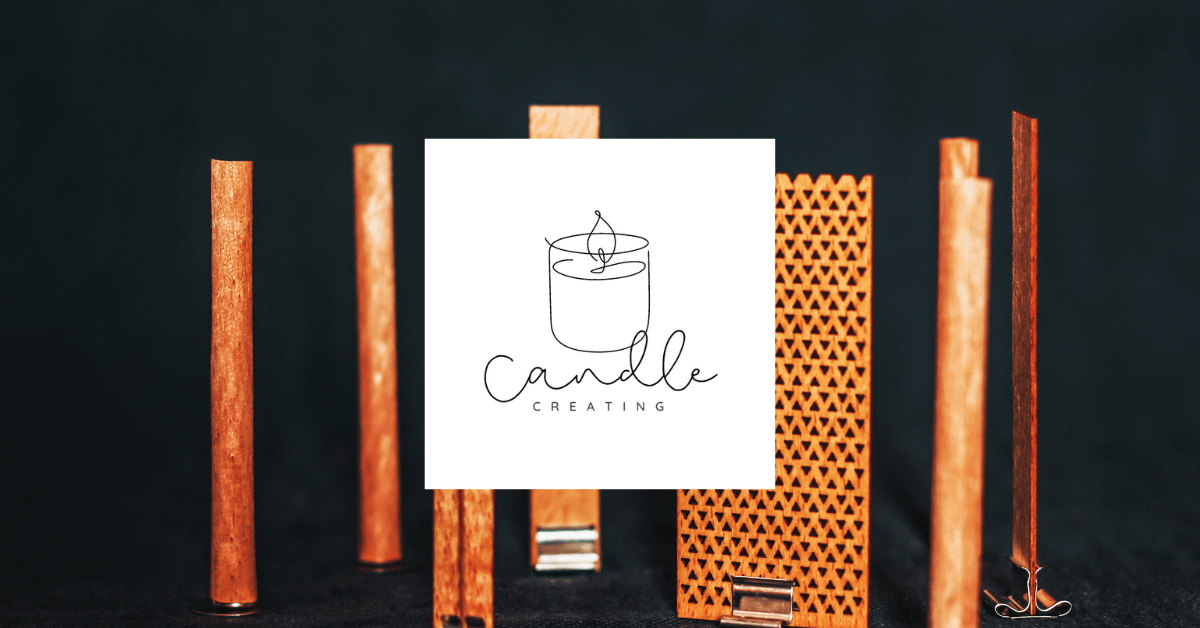
Wooden wicks create a wider flame shape and may produce an audible crackle. Available styles include single-ply, booster, double-ply, spiral, and tube designs. Thickness, width, wood treatment, clip, wax, fragrance, and vessel diameter all affect performance.
Wooden wicks are not automatically cleaner, safer, or more sustainable than cotton wicks. Those outcomes depend on sourcing and on how the finished candle is designed and burned. Wood wicks generally need to be trimmed shorter than cotton wicks and can be sensitive to excessive fragrance, dye, or an incorrect wax match.
For a practical product option, see the wooden candle wick kit guide.
7. Specialty and Purpose-Specific Wicks
Some suppliers offer hemp blends, tube wicks, crackling wick systems, wick assemblies for gel candles, and other specialized constructions. Treat marketing descriptions as product information, not a substitute for a burn test. Ask for a technical or selection guide and test the exact series in the intended wax.
Candle Wick Types Comparison Chart
| Wick type | Common starting applications | Important testing notes |
|---|---|---|
| Flat braid | Tapers, pillars, votives, and series-specific container candles | Check curl direction, flame stability, carbon buildup, and melt-pool growth. |
| Square braid | Beeswax, pillars, tapers, and viscous wax systems | Supplier numbering may differ from other families. Test wax purity and candle diameter. |
| Coreless cotton or paper-filament series | Soy, coconut blends, paraffin, and other container waxes | CD, ECO, LX, HTP, and Premier sizes are not interchangeable. |
| Paper core | Containers, votives, and applications needing added rigidity | Watch flame size, soot, and how the wick behaves in the chosen wax. |
| Zinc core | Some containers, votives, tealights, and wax systems needing an upright wick | Monitor mushrooming, soot, vessel heat, and end-of-candle performance. |
| Wood | Container candles designed for a wide flame and optional crackle | Width, thickness, booster style, wax, fragrance, and trim height all matter. |
| Specialty wick | Gel, unusually shaped candles, tubes, or proprietary wax systems | Use the exact manufacturer’s guidance and document every variable. |
How to Choose the Right Wick for a Candle
- Identify the candle format. Container, pillar, taper, votive, tealight, and molded candles have different structural and burn requirements.
- Confirm the wax. Use the exact wax or blend you intend to pour. If you are still deciding, compare the options in How to Choose the Right Candle Wax.
- Measure the inside diameter. Measure the area the melt pool must cover, not the outside of the jar. For tapered or irregular vessels, record the changing interior width.
- Choose a wick family. Start with a series recommended by the wick or wax supplier for that application.
- Consult a current supplier chart. Cross-reference the exact wax and diameter. CandleScience describes its wick chart as a starting point for testing, not a guaranteed final answer.
- Make a small test set. Test the suggested size, one nearby size smaller, and one nearby size larger when practical.
- Keep every other variable the same. Use identical vessels, wax, fragrance percentage, dye, pour process, fill weight, cure time, and wick placement.
- Test through the candle’s life. A wick that looks good during the first burn can become too hot when the flame sits deeper in the vessel.
Variables That May Change the Wick Requirement
- Wax type, blend, and additives
- Inside vessel diameter and shape
- Fragrance oil type and percentage
- Dye type and concentration
- Single-wick versus multiple-wick layout
- Wick series, treatment, and tab assembly
- Cure time and room conditions
- Manufacturing consistency and wick centering
Testing shortcut that actually helps: Change one variable at a time. If you change the wick, fragrance load, and wax blend together, you will not know which change fixed or created the problem.
When Should You Use Multiple Wicks?
Wide containers and unusual shapes can be difficult to heat evenly with one wick. Multiple smaller wicks may distribute heat more evenly than one very large wick, but adding wicks also adds total flame and heat.
Consider testing multiple wicks when:
- The vessel is wider than the tested range for a practical single wick.
- A large single wick produces a tall flame or excessive center heat before reaching the edges.
- The vessel is oval, rectangular, or otherwise difficult to cover with one circular melt pool.
- The vessel supplier or an established formula recommends a multi-wick arrangement.
Do not simply double the single-wick recommendation. Select smaller wicks, space them evenly, keep them away from the vessel walls, and test the combined system. CandleScience recommends testing candidate sizes before buying large quantities and provides separate guidance for double-wicking container candles.
How to Conduct a Candle Wick Burn Test
A wick chart gets you to the first test. The burn test determines whether the complete candle design is suitable for further development.
Prepare the Test Candles
- Label every candle with the wick series and size.
- Use identical vessels and measured fill weights.
- Center and secure each wick consistently.
- Use the same wax batch, fragrance, dye, pour temperature, and cure time.
- Place tests on a stable, heat-resistant surface away from drafts and combustible material.
Record Each Burn Cycle
- Initial wick trim length
- Room conditions and start time
- Flame height and stability
- Melt-pool width and depth over time
- Visible smoke, soot, mushrooming, or debris
- Hot throw observations
- Wick position and whether it leans or drifts
- Vessel temperature and any visible vessel change
- Amount of wax consumed
- Performance near the bottom of the candle
Follow the intended candle-care instructions and do not exceed the planned maximum burn period. Let the candles cool fully between cycles. Repeat the process until the candle reaches its safe stopping point.
Never leave a burn test unattended. Stop the test if a container cracks, the flame becomes excessive, the wick shifts toward the wall, the candle produces heavy soot, or the vessel becomes dangerously hot.
What a Promising Test Looks Like
A promising wick produces a stable flame, limited visible soot, controlled melt-pool development, reasonable wax consumption, and acceptable vessel behavior throughout the candle. The melt pool may not reach the edge immediately during the first burn, especially in some natural-wax systems. Judge the pattern across repeated cycles rather than chasing one first-burn photograph.
Troubleshooting Common Wick Problems
Small Flame or Persistent Tunneling
Possible causes: Wick too small, wick series incompatible with the wax, excessive dye or fragrance, wick trimmed too short, wax clogging, or an off-center wick.
Next test: Confirm the formula and centering, then test the next appropriate wick size or another recommended series. Do not judge only the first hour of the first burn.
Wick Drowns or Extinguishes
Possible causes: Wick too small, wick cut too short, wick not secured, overly deep melt pool, or fuel flow restricted by additives.
Next test: Correct the trim and assembly first. If the problem repeats in a fresh test candle, evaluate a different size or series.
Tall Flame, Rapid Burn, or Very Deep Melt Pool
Possible causes: Wick too large, too many wicks, wick left too long, draft exposure, or a formula that delivers fuel too quickly.
Next test: Remove the draft and use the correct trim. If the behavior remains, test a smaller wick or revise the multi-wick layout.
Mushrooming or Carbon Cap
Possible causes: Wick oversized for the formula, excessive fuel delivery, long burn sessions, high fragrance or dye load, or normal behavior of a particular series taken too far.
Next test: Confirm burn time and trim, then compare a smaller size or a different wick family.
Soot on the Vessel
Possible causes: Wick too large, untrimmed carbon, drafts, excessive fragrance, debris in the melt pool, or an unstable flame.
Next test: Correct trim and environment, keep the wax clean, and evaluate a smaller or different wick if soot continues.
Wood Wick Will Not Stay Lit
Possible causes: Incorrect width or thickness, wick trimmed too short or left too long, incompatible wax, excessive fragrance or dye, or wax coating the wick surface.
Next test: Follow the wooden-wick manufacturer’s trim and sizing chart. Compare a nearby width, thickness, or booster configuration.
For problems involving tunneling, one-sided melt pools, or wick placement, continue with How to Troubleshoot Candles That Burn Unevenly.
Wick Trimming and Candle Care
Even a correctly selected wick can burn poorly when it is not maintained. The National Candle Association recommends trimming a candle wick to about 1/4 inch before lighting and removing debris from the wax pool. Wooden-wick makers often specify a shorter trim, commonly around 1/8 inch, so follow the instructions for the exact wick and candle.
- Let the candle cool completely before trimming.
- Remove loose wick trimmings, matches, and other debris.
- Keep the wick centered and do not push it through hot wax.
- Burn the candle away from fans, vents, open windows, and traffic.
- Follow the maker’s maximum burn time and stopping instructions.
- Retire a candle if its vessel is cracked, chipped, or otherwise damaged.
A dedicated tool can make clean trimming easier as the wax level drops. See the candle wick trimmer guide for features and care tips.
Frequently Asked Questions
What is the best wick for soy candles?
There is no single best soy-candle wick. CD, ECO, HTP, LX, Premier, and wooden-wick families may all be starting candidates depending on the exact soy wax, fragrance, dye, vessel diameter, and supplier recommendations. Use the wax or wick supplier’s chart and conduct comparative burn tests.
What wick should I use for beeswax?
Square-braided cotton wick is a common starting point for beeswax pillars and tapers, but the correct size depends on candle diameter, wax purity, additives, and form. Rolled beeswax sheets and poured beeswax candles may require different starting sizes.
Are wooden wicks better than cotton wicks?
Neither is universally better. Wooden wicks offer a distinctive flame shape, appearance, and possible crackle. Cotton wick families offer many constructions and sizes and may be easier to source for certain formulas. Performance depends on the finished candle and testing.
Does a larger wick number always mean a larger wick?
Only within some individual wick families. Numbering conventions vary, and size numbers should not be compared across CD, ECO, LX, HTP, Premier, square-braid, or wooden-wick systems.
How do I know if my candle is underwicked?
Possible signs include a persistently small flame, tunneling that does not improve over repeated cycles, a wick that repeatedly drowns, and weak melt-pool development. Confirm cure time, trim, centering, wax, fragrance, and dye before automatically increasing wick size.
How do I know if my candle is overwicked?
Possible signs include an excessively tall or unstable flame, rapid wax consumption, a very deep melt pool, heavy mushrooming, soot, or excessive vessel heat. Drafts and poor wick maintenance can create similar symptoms, so control the test environment.
Do modern candle wicks contain lead?
Lead-core candle wicks are prohibited in the United States. The National Candle Association explains that its members stopped using lead wicks decades ago. Purchase wicks and finished candles from reputable suppliers and do not confuse zinc-core wicks with lead-core products.
Can I choose a wick without burn testing?
A supplier chart can identify useful starting sizes, but it cannot account for every fragrance, dye, vessel, manufacturing variation, and use condition. Burn testing is necessary before treating a candle formula as finished.
Choose With a Chart, Confirm With a Test
The right wick is not chosen by material alone. Begin with the candle format, exact wax, inside diameter, and supplier recommendations. Then compare nearby sizes under controlled conditions and continue testing until the candle reaches its safe stopping point.
New to candle making? Continue with Getting Started With Candle Making, review the basic candle-making materials, or explore the complete How to Make Candles resource hub.
Safety note: Always supervise burning candles, use an appropriate heat-resistant surface, keep the flame away from drafts and combustible materials, and stop using a candle that behaves unpredictably or has a damaged container.