
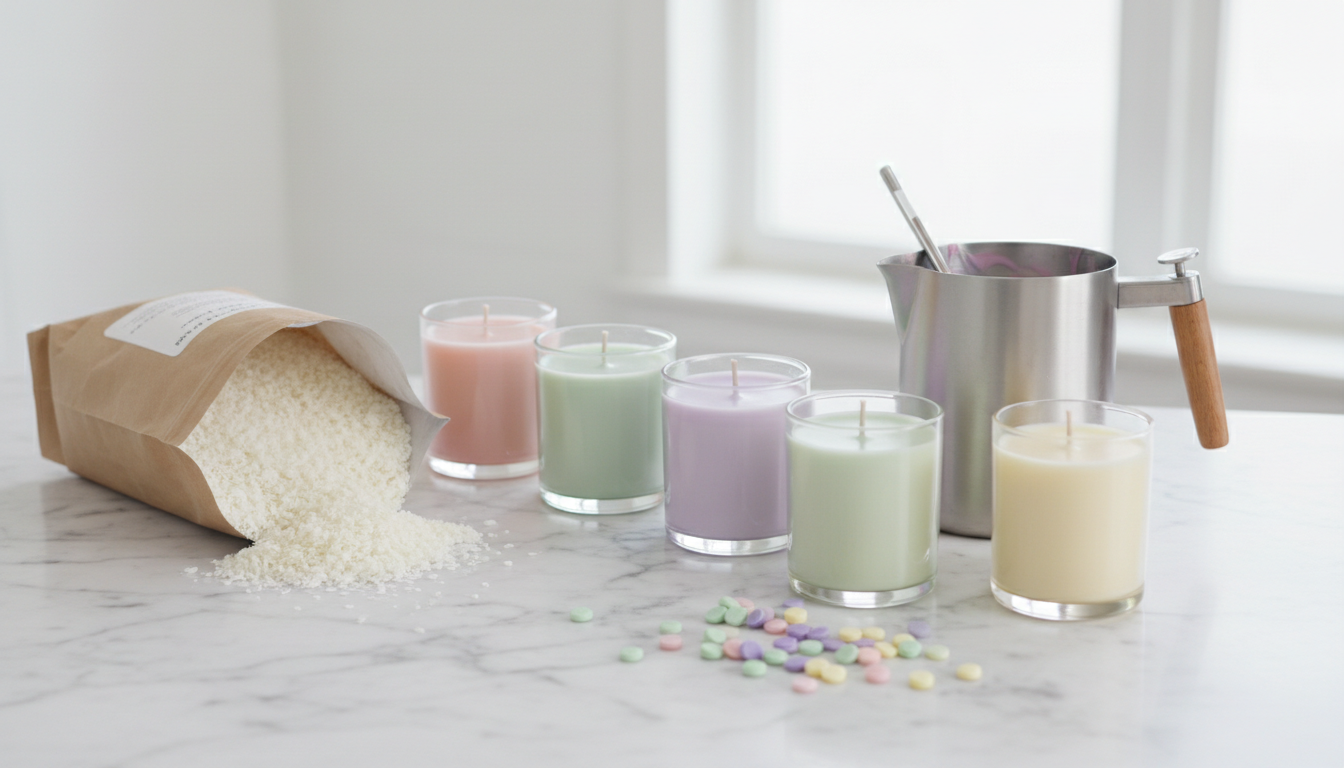
Soy wax is the most popular wax for homemade container candles, and it takes color well once you know its quirks. Because soy is creamy and opaque, a shade that looks rich in the pitcher often cools into something softer and lighter. Soy can also develop white frosting that shows up most on dark colors.
This guide shows you how to dye soy wax step by step, when to add the dye, how to get brighter colors, and how to fix the most common problems.
Quick answer: Melt your soy wax fully, add a candle dye made for soy or natural waxes a little at a time, and stir for one to two minutes before adding fragrance. Test a drop on white paper and let it cool, because soy dries lighter than it looks when melted. Adjust, add fragrance, then pour.
Can You Dye Soy Wax?
Yes. Soy wax accepts the same liquid dyes, dye blocks and dye chips used for other candle waxes. The main differences are visual. Soy is naturally cream-colored and opaque, so it favors pastels, earthy tones and muted shades. Deep, jewel-like colors are possible, but they take more dye and are more likely to show frosting.
What You Need
- Soy container wax. See our guides to Millennium soy wax beads and Freedom coconut soy wax.
- Candle dye for natural waxes, such as Hearth & Harbor liquid candle dye or Hearth & Harbor dye blocks.
- A double boiler or wax melter, plus a thermometer
- A digital scale
- A pouring pitcher and a silicone or metal stirring utensil
- White paper or a white plate for color tests
- Fragrance oil, wicks and candle jars
As an Amazon Associate, Candle Creating earns from qualifying purchases.
How to Dye Soy Wax in 6 Steps

- Weigh the wax. Measure soy wax by weight, not volume, and note the amount. Dye and fragrance are both based on wax weight. Our candle wax calculator tells you how much you need for your jars.
- Melt it fully. Heat the wax in a double boiler or melter to the temperature in your wax supplier’s instructions. Dye dissolves best when every flake is fully liquid.
- Add the dye first. Add a small amount of dye before the fragrance: a drop or two of liquid, or a small piece of a block. Stir gently but thoroughly for one to two minutes so it dissolves completely.
- Test a drop. Drip a little wax onto white paper and let it cool fully. That cooled drop is your real color. Add more dye in small amounts if needed, testing each time.
- Add fragrance. Once you are happy with the color, add fragrance at the temperature your wax supplier recommends, stay within its fragrance load, and stir for about two minutes.
- Pour and cure. Pour at the recommended temperature, let the candles cool slowly away from drafts, and let them cure before judging the final color and scent. Write down the dye amount so you can repeat it.
When Should You Add Dye to Soy Wax?
Add dye while the wax is fully melted and before the fragrance. Hotter wax dissolves dye faster and more evenly, especially dye blocks and chips. Adding dye first also lets you lock in the color before you start the fragrance timing, which is often more temperature-sensitive.
How Much Dye Do You Need for Soy Wax?
It depends on the dye’s concentration and the shade you want, so start with the dye maker’s guidance and go lighter. Soy is opaque, so it generally needs a bit more dye than paraffin for the same depth of color. Build up slowly, test a cooled drop each time, and stop at the lightest amount that gives you the shade. Overdyeing can affect how the wick burns.
For an overview of dye formats and picks, see our guide to the best candle dyes.
How to Get Brighter Colors in Soy Wax
- Use a dye made for natural waxes. Some paraffin-focused dyes look duller in soy.
- Build color gradually. Several small additions give you more control than one large one.
- Choose shades that suit soy. Earthy, dusty and pastel colors look intentional in soy and hide frosting.
- Try a soy blend. Coconut-soy and soy-paraffin blends often show brighter, smoother color than 100% soy.
- Keep dye records. Note the dye brand, amount, wax batch and pour temperature for every color.
Why Soy Colors Look Lighter After Cooling
Melted soy is translucent, so the dye looks dark and saturated. As the wax sets, it turns opaque and cream-colored, which softens every shade. That is why testing a cooled drop matters so much: a navy pitcher often becomes a medium blue candle.
Troubleshooting Dyed Soy Wax
| Problem | Likely cause | Fix |
|---|---|---|
| Specks of color | Dye block or chip didn’t fully dissolve | Stir longer at full melt; use liquid dye for small batches |
| Color is too pale | Judged the melted wax instead of a cooled drop | Add dye gradually and always test a cooled drop |
| White frosting or crystals | Natural soy crystallization, most visible on dark colors | Pour slightly cooler, cool slowly, or choose lighter shades |
| Streaks or uneven color | Not stirred enough, or dye added to cooling wax | Add dye at full melt and stir one to two minutes |
| Color fades over time | Light exposure, especially sunlight | Store candles out of direct sun; use a UV inhibitor if your supplier offers one |
| Color shifts after adding fragrance | Some fragrance oils are naturally tinted | Test dye and fragrance together and record the combination |
More fixes for sinkholes, wet spots and tunneling are in our guide to common candle-making mistakes.
What Not to Use in Soy Wax
Skip food coloring, crayons, mica powder and spices. They don’t dissolve in wax and can clog the wick. Our guide Can You Use Food Coloring in Candles? explains why in detail.
Frequently Asked Questions
Do you add dye or fragrance first to soy wax?
Dye first. Add it while the wax is fully melted so it dissolves completely, then add fragrance at your supplier’s recommended temperature.
Can you make black soy candles?
True black is difficult in soy. It takes a lot of dye, which can affect the burn, and frosting shows clearly. A deep charcoal is more realistic. Burn-test any heavily dyed candle.
Does dye affect soy candle scent throw?
In normal amounts, no. Very heavy dyeing can change how the wick burns, which can indirectly affect hot throw.
Can you dye soy wax with natural colorants?
It is difficult. Most kitchen ingredients don’t dissolve and can clog the wick. Our guide to natural candle dyes covers what can work and how to test it safely.
How do I dye soy wax melts?
The same way as candles, using a soy wax formulated for melts. Because melts have no wick, you can also add mica for shimmer.
Leave a Reply